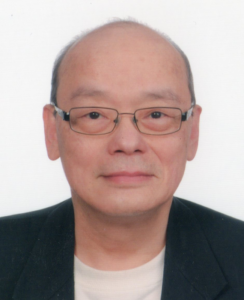
Shaw-Hwa Lo
The Department of Statistics at Columbia University mourns the passing of Professor Shaw-Hwa Lo, who passed away on October 25, 2025, at the age of 74. Professor Lo was a distinguished statistician, teacher, and collaborator whose work transformed both theoretical and applied statistics. His research in asymptotic theory, survival analysis, resampling methods, and statistical genetics expanded the reach of the field of Statistics into domains as diverse as molecular biology, public health, and transportation. He became a fellow of the Institute of Mathematical Statistics in 1995 and a fellow of the American Statistical Association in 1997.
Born and raised in Taiwan, Lo earned his BS in Mathematics from National Taiwan University in 1975. A scholarship brought him to the United States, where he completed his MA in Mathematics at the University of California, Santa Barbara, in 1978, and his PhD in Statistics at the University of California, Berkeley, in 1981, under the guidance of Lucien Le Cam. After faculty appointments at Rutgers and Harvard Universities, he joined Columbia University in 1990, where he remained for the rest of his career.
At Columbia, Lo played a pivotal role in revitalizing the Department of Statistics. As Co-Chair (1995–1998) and Chair (1998–2004), he worked closely with Paul Meier to rebuild the department’s programs, recruit new faculty, and establish a strong PhD program, as well as two master’s programs. Under their leadership, the department grew from four faculty members in 1990 to a thriving community of over 25. His vision for an interdisciplinary, application-driven department through faculty hiring and graduate education anticipated the rise of data science and helped establish Columbia as a leading institution in the field.
Lo’s early work focused on survival analysis and resampling methods, where he made elegant and influential contributions. His probabilistic representations of the Kaplan–Meier estimator provided new insights into its tail behavior, leading to simplified analyses of censored and truncated data. His decomposition of the bootstrap statistic into interpretable stochastic components provided a unified framework for understanding bootstrap convergence, resolving questions that had remained open for years.
In the late 1990s, Lo turned his attention to genetics and biomedical data, at a time when the Human Genome Project was beginning to reshape the sciences. He recognized that these new types of data would require fundamentally new approaches to variable selection and prediction. This led him to develop the Partition Retention (PR) framework and the I-Score, a measure of predictive power that assesses how well a set of variables jointly predicts a response. These ideas helped shift statistical practice away from significance-based modeling toward a prediction-driven framework. The I-Score approach dramatically improved prediction accuracy in applications such as breast cancer classification, reducing error rates from 30% to 8%. Through this line of research, he also became a long-time collaborator of Herman Chernoff, with whom he co-authored seminal papers on predictivity and influential variables, including publications in PNAS and the Annals of Applied Statistics. More recently, these advanced methodologies have been integrated with statistical learning and deep learning, helping to bridge the gap between prediction and causal reasoning and informing the “explainable” component of explainable AI.
In 2019, the New England Statistical Society recognized Lo’s lifetime of innovation by awarding him the inaugural Chernoff Excellence in Statistics Award, the society’s highest honor. The award citation noted not only his theoretical contributions but also his ability to connect statistical innovation with real-world impact, embodying the spirit of data science before the term became ubiquitous.
Beyond his research, Professor Lo was an inspiring mentor and educator who guided generations of statisticians and data scientists. His former students and colleagues recall his enthusiasm and ability to spark curiosity. At Columbia, the PhD students supervised and co-supervised include Kani Chen, Xin Liu, Tian Zheng, Iuliana Ionita, Hui Wang, Xin Yan, Chien-Hsun Hwang, Michael Agne, Ruixue (Rachel) Fan, Jonathan Auerbach, and Lydia Hsu, many of whom have gone on to distinguished careers in academia and industry. As Tian Zheng, former student and current faculty member of Columbia’s Department of Statistics, has reflected, “He taught us not to work on problems limited by today’s technology, but on challenges that push knowledge forward.” He demonstrated this clearly with his continuous efforts to immerse himself with the recent developments of genetics, machine learning and AI.
He inspired generations of students through both his intellectual depth and his humanity. Many of his students have gone on to become leaders in academia and industry. His impact is also felt through the programs he helped build at Columbia, including highly successful master’s and doctoral programs that continue to attract students from around the world.
Lo’s personal warmth and humor complemented his academic rigor. He was known for his love of Chinese tea, his Thanksgiving parties, his long morning runs along Riverside Park, and his lively curiosity about every new idea that crossed his desk. He is survived by his wife, Vicky Chao, his daughter, Adeline Lo, and his son, Alexander Lo.
Professor Shaw-Hwa Lo’s passing leaves a deep void in the Columbia community and in the international world of statistics. His intellectual legacy—marked by creativity, vision, and mentorship—will continue to shape the field for decades to come.
—
Written by Bodhisattva Sen, Columbia University
You can also read a profile of Shaw-Hwa Lo, written when he received the Chernoff Excellence in Statistics Award in 2019 from the New England Statistical Society.